Ye Meri Life Hai - Chirag Mehta

Be Good & Do Good!

Tag: India (page 3 of 18)

Golden Globe Awards: List of winners

Here goes list of Golden Globe Award Winners .. There’s 3 names at bottom of the list which makes India on top of the Golden Globe 2009 Awards

# Kate Winslet wins Best Supporting Actress in a motion picture for ‘The Reader’

# Bruce Springsteen wins Best original Song-Motion Picture for ‘The Wrestler’

# Tom Wilkinson wins Best Supporting Actor Mini Series for ‘John Adams’

# Laura Dern wins Best Supporting Actress in Mini Series for ‘Recount’

# Heath Ledger wins Best Supporting Actor in a Motion Picture for ‘The Dark Night’

# Waltz With Bashir (Israel) wins Best Foreign Language Film award

# Wall-E wins Best Animated Feature Film award

# Anna Paquin wins Best Actress in a TV Series – Drama for true Blood

# Simon Beaufoy wins Best Screenplay for Slumdog Millionaire

# A R Rahman wins Best Original Music Score for Slumdog Millionaire

# Danny Boyle wins Best Motion Picture, Best Director for Slumdog Millionaire

Best LittleCo of 2008: Zoho

zoho_dec_08.jpgWe felt that Web Office vendor Zoho best represented the ‘LittleCo’ ethos this year, due to its David vs Goliath effort in competing head on with products from several very large companies: Microsoft Office, Google Apps, Salesforce.com’s core CRM platform.

Zoho not only competed with these bigcos, they were innovative and scrappy about it. And in a year that will be remembered for the economic downturn, Zoho is a reminder to us all that we can work ourselves out of a down economy.

Zoho made two of our year-end Top 10 Products list – in the International category and in the Enterprise catagory. It is an Indian startup that offers a number of office tools, project management software and CRM solutions. It made serious advances with its office productivity suite during 2008, reaching a milestone of 1 million users in August this year.

Some of the specific highlights this year include: updating Writer at the beginning of 2008 to include support for the DocX file format, along with several other features; adding support for Visual Basic compatible macros to Zoho Sheet in April, then macro record and playback four months later; releasing a marketplace in September; Zoho Mail emerging from private beta in October, while offering offline support via Google Gears.

Zoho

Our one note of caution with Zoho is that, as you can see from the above screenshot, it has so many products that it potentially spreads itself too thin. Some of its products show a lack of depth as a result – we focused on some of those issues in a post in September. So we’re not claiming Zoho has the Web Office market cracked, just as Twitter had some issues last year when we chose it as our Best LittleCo. But overall, we applaud Zoho for its continued innovation and for competing effectively against the big guns!

Disconnect handsets that do not have an IMEI number

Come January 6 and as many as 25 million mobile phones could be disconnected by the telecom operators.

Concerned about the terrorist attacks in the recent past, the department of telecom (DoT) has asked service providers to disconnect handsets that do not have an international mobile equipment identity (IMEI) number.

IMEI is a unique 15 digit code that identifies a mobile. It prevents the use of stolen handsets for making calls and allows lawful interception to prove the use of a particular device.

The IMEI number appears on the operator’s network whenever a call is made. DoT has asked the service providers to equip networks with Equipment Identity Register (EIR) to check whether calls are made from genuine handsets.

“In the interest of national security, all cellular mobile service providers in unified access service licences (UASL) are hereby directed to make provisions for EIR so that calls without IMEI or with IMEI consisting of all zeroes are not processed or rejected,” DoT said in a letter to operators on October 6.

“If switches do not have such a facility, the necessary hardware and software should be put in place within three months of the issue date of this letter and compliance reported,” it added.

Indian Cellular Association (ICA), the industry body for handset makers, believes that illegal IMEI handsets are being used as there is no validation of IMEI numbers in mobiles entering the country either through sea or air.

Moreover, there is no central mechanism to prohibit the use of stolen phones. The bulk of grey market phones, predominantly originating from China, do not have genuine IMEI numbers. ICA estimates around 25 million such handsets in the country.

However, some operators ET spoke to expressed their inability to meet the DoT deadline due to technical reasons. “What the DoT is trying to do is to block all calls with zeroes as IMEI numbers or from blacklisted numbers. That adds an extra load on networks. There are so many combinations of non-genuine IMEI numbers that it is extremely difficult to block them. Network upgradation is required to block all such calls and not all our multiple equipment vendors are equipped to do it,” a senior official told ET.

He further explained that interrogating all calls would delay call set-up time. “Switches will interrogate most of the time and may not be able to process any calls,” he added.

Another top official at a telecom firm said the move will affect customers who unknowingly bought mobiles without IMEI or whose numbers have been duplicated by others. “The duplicate devices currently being used will not last beyond two-three years. The way out is to check imports to stop entry of handsets without genuine IMEI into India,” he added.

What’s Next – Terror Target Date ?

13 May : JAIPUR

June : N/A

26 July : AHMEDABAD

August : N/A

13 September : DELHI

October : N/A

26 November : MUMBAI

December : N/A(hopefully)

13 January : What Next?

Ack : Nimit Dudani

How you can safeguard your current job

Marcel R Parker, Chairman, IKYA Human Solutions Pvt Ltd , has some tips on how you can safeguard your current job.

1. Under promise and over deliver

Walk that extra mile for the organisation with a smile as though your life depended on it. You are bound to get noticed for your attitude. Stick to your targets and deadlines consistently.

2. Get proactive

Volunteer for new tasks/responsibilities, no matter how mundane or onerous they may be. Look at it this way- Can I add value to myself and my organisation by doing these tasks?

3. Get stingy

Try and find ways to save and reduce wasteful expenditure no matter how silly they may appear-this demonstrates concern for the organisation in hard times. For example, conserving energy, printing only what is essential, recycling water etc may seem petty but these costs if well managed can have huge saving potential.

Even to add, there’s a disclaimer too 🙂
Disclaimer: While we have made efforts to ensure the accuracy of our content (consisting of articles and information), neither this website nor the author shall be held responsible for any losses/ incidents suffered by people accessing, using or is supplied with the content.

Source : IBNLive.com

What you should do if you lose your job

Across sectors there are fears of cost cutting and consolidation. “Most people never predict a job loss,” continues Aruna Sampat of HR consultancy firm Career Catalysts, “and are caught off guard when they get laid off.”

Sampat cuts the jargon and tells you what you should do if you lose your job.

1. Don’t panic

A job loss has nothing to do with performance, or your ability. It’s more about redundancy of your role in the company. Once this understanding seeps in, you will you be able to concentrate on finding a new job.

2. Make a list

Update your resume and follow a daily schedule. Now that you have time on hand, set aside at least five to six hours a day on job hunting – including research, calls, interviews etc. Make a list of the people and companies which can help you. Be specific on how they can help you.

3. Get aggressive

Make sure that you have your detailed resume up on every job portal there is. Some portals you can put your resume are jobstreet.com, monster.com, naukri.com, yellowjobs.com, timesjobs.com, shine.com etc.

4. Talk to other pros

Focus on what kind of job you want. Assess market situation and make your plan. If a role is interesting but the company is not so much a brand name, are you willing for a lateral move, or would you like to take a cut in salary for a brand? Think through. Talking to senior professionals may help to give you a perspective

5. Freelance

Do not hesitate to take up freelance assignments. Look at it this way. You will keep your skills up to date and it will bring home a few bucks. In the meanwhile keep hunting for a job.

6. Be transparent

Most people don’t want to mention they have been laid off. “But hiding it will only complicate things,” continues Sampat, “being laid off is not a taboo anymore amongst companies. They will hire you for your skills.” So be transparent in your next job interview and tell them why you were laid off.

7. No blame-game

Blaming the company or your luck during an interview is a strict no-no. Companies like hiring people with a positive outlook. After all, this can happen to any company.

8. Reference friendly

Make sure that you have all your references ready when you go for interviews and do not hesitate to give them if asked. Inform your reference in advance so that they are not caught unaware and will able to contribute in getting you a job.

9. Network

You have the time to go out, so make use of it. Network like crazy. Nothing has more impact than a meeting. Also make sure you follow up with your contacts so that they think of you the first time an opportunity springs up.

10. Stay healthy

Last but not the least you have to stay fit and keep healthy. Only this will keep you motivated and mentally fit.

“Getting a new job can take time – from a week to several months,” continues Sampat, “but the real test is to stay put in these times and focus on sailing through this crisis.”

Source : IBNLive.com

Lets Dream to see an Indian astronaut walk the moon

The above is the dream of A P J Abdul Kalam. Shouldn’t we make this dream of every Indian.

India on Friday became the fourth nation to have its flag flying on the Moon’s surface when Chandrayaan-1’s Moon Impact Probe device, – which has the Indian Tricolour painted on it – touched down.

India's chandrayan I

The 35-kilo payload crash-landed on the lunar surface at around 2030 hrs IST. The MIP has started sending its first signals to the satellite.

It also contains equipment which will help scientists design a lunar lander or rover for the upcoming Chandrayaan-2 mission.

There’s a lot tucked away inside the MIP. There’s a device to constantly check its height as it falls, another to check what the air on the moon is made of and even a video camera to photograph the moon from close range.

Those photographs will help ISRO decide where to land India’s first moon rover, a few years from now. The MIP also has the Indian flag painted on its sides a Sanskrit shloka as well.

The MIP disconnected from Chandrayaan at 100 km from the moon. As it fell, it kept sending information back to the satellite.

Closer to the surface, rockets were fired to slow down its speed and soften impact.

After 30 min of free fall, the MIP crash-landed on the south pole of moon.

The MIP is the brainchild of former president APJ Abdul Kalam. He said it’s his dream to see an Indian astronaut walk the moon.

The youth of India should consider that encouragement of the youth is the most powerful resource on the earth, above and underneath, India will do it,” he said.

TATA’s recent move dampens spirit of Symbolising India as a economic power

Tata Motors’ chief, Ratan Tata has issued a six-point directive to his group of companies to deal with the ongoing financial crisis.

Among other things, he has asked the Chief Executives of his 96 group of companies to defer acquisition plans unless they are strategically motivated.

The companies have also been asked to defer capital expenditure and capacity expansion unless required.

The companies have also been asked to conserve cash as much as possible and restructure the internal cost framework.

The directive signals a shift in the aggressive business policy of the Tatas.

In the recent past, Tata Steel’s acquisition of steel giant Corus and Tata Motors’ takeover of Jaguar Land Rover had symbolised India’s economic power. The recent move is sure to dampen spirits.

On Monday, Tata Motors shut its Lucknow plant for six days and has decided to shut down its Pune plant from November 21 to November 26.

Workers are being asked to go on a three-day forced leave and three-day leave on half-pay.

It will be a six-day forced leave for employees. Additionally, they have been asked to write and submit a leave application for the six days.

Maharashtrian ethos must be seen in Mumbai

Should the Maharashtra government be dismissed and do Maharashtrians have a raw deal in their own capital? Those are the two issues Karan Thapar raised with the senior-most leader of the Nationalist Congress Party (NCP) and Civil Aviation Minister Praful Patel.

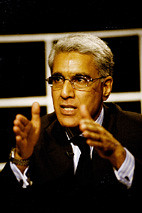
Karan Thapar Prafull Patel

Karan Thapar: Two of your most senior leaders (in the UPA) have demanded dismissal of your government in Maharashtra. What’s your answer to Ram Vilas Paswan and Amar Singh?

Praful Patel: I don’t think dismissal of any government is that easy.

Karan Thapar: Is it warranted in the present circumstances?

Praful Patel: Of course not. I don’t see any reason to dismiss the government in Maharashtra.

Karan Thapar: So your allies are playing politics with you?

Praful Patel: It’s an emotive issue which they are facing, after all it concerns people from their state. In a democratic set up and the kind of polity we are seeing today, all these things happen every day.

Karan Thapar: So you’re saying Ram Vilas Paswan and Amar Singh don’t know what they are calling for?

Praful Patel: No, I’m not dismissing their concerns. I’m saying they have a valid reason to raise this issue.

Karan Thapar: What about the demand to at least change the Chief Minister. Your own CM’s Cabinet colleagues, such as Pratap Rane, are today publicly disenchanting his performance. Why don’t you change the CM then?

Praful Patel: Why should the CM or anybody else be changed? People who live in Mumbai are the only ones who know the situation on the ground. The entire issue is very sad and unfortunate. It should not be allowed to happen but at the same time saying that changing the CM is a valid solution—

Karan Thapar: For five days since Diwali, the CM as well Deputy CM have been out of Mumbai. They haven’t even been in the Capital. There’s a sense of fear and crisis, and they don’t see it as their moral responsibility to be in the seat of government to reassure people?

Praful Patel: I do not agree with you Karan. The fact is that they are in control of the situation. They don’t necessarily have to be on the streets of Mumbai. There’s a system, a police department, people in the government who are monitoring the situation through the clock. Why should this kind of a situation come up?

Karan Thapar: The Cabinet in Delhi is demanding from the PM to put pressure on Maharashtra government to at least agree to a magisterial enquiry. You, for the PM’s sake, accept the need for a magisterial enquiry?

Praful Patel: I am not in the Maharashtra government to answer every single question. The fact is that it’s within his moral authority of the PM, as the custodian of the entire nature, to ask the Maharashtra government about these issues.

Karan Thapar: What about the need for an enquiry to reassure the people that the police have not acted wrongly?

Praful Patel: Just look at the entire thing in sequence. Mr Raj Thackeray has been arrested in connection with particular cases. Eighty-eight cases in all are registered against him. He has gotten bail from the court. This is natural justice, which is available to each and every citizen of India.

The gentleman who was shot dead by the Mumbai police in an encounter in that bus was holding many innocent people hostage and it’s all on television camera.

Karan Thapar: There is a sense of anger in UP and Bihar. People are demanding an enquiry to clear the air. If you are convinced that your police have acted properly, hold the enquiry and exonerate them. Why deny that demand? Is the government open to the possibility of a magisterial enquiry?

Read Remaining Conversation @ IBN Live.com

An Open Letter to Raj Thackeray by Rajdeep Sardesai

Rajdeep Sardesai

My Dear Raj,

My apologies for having to communicate through the editorial pages of a newspaper, but frankly am left with little choice since you seem to have decided to stay away from the so-called ‘national’ non-Marathi media. Let me at the very outset say that I am impressed with the manner you have carved a niche on the political landscape of Maharashtra. I distinctly remember meeting you in February last year soon after the Mumbai municipal corporation elections. It wasn’t the best of times: your party, the Maharashtra Navnirman Sena had been marginalized while your cousin Udhav Thackeray and the Shiv Sena had captured power in the city. With many of your supporters deserting you, you appeared down, if not quite out. Twenty months later, I see you’ve bounced back: every local and national daily has you on the front page, you are the subject of television debates and your politics has even united Bihar’s warring netas.

And yet, my friend, there is a thin line between fame and notoriety, more so in the fickle world of politics. Bashing north Indian students may grab the headlines, getting arrested may even get you sympathy and strident rhetoric will always have a constituency, but will it be enough to secure your ultimate dream of succeeding your uncle Bal Thackeray as the flagbearer of Marathi asmita (pride)?

If Balasaheb in the 1960s rose to prominence by targeting the south Indian “lungiwala”, you have made the north Indian “bhaiyaa” the new ‘enemy’. In the 1960s, the Maharashtrian middle class in Mumbai was feeling the pressure of job competition for white collar clerical jobs. Today, it seems that there is a similar sense of frustration at losing out economically and culturally to other social groups in Mumbai’s endless battle for scarce resources. With the Congress and the NCP having become the real estate agents of the state’s rural-urban bourgeoise and the Shiv Sena a pale shadow of its original avatar, the space has been created for a charismatic leader to emerge as a rabble-rouser espousing the sons of the soil platform.

But Raj, I must remind you that electoral politics is very different from street agitations. Sure, round the clock coverage of taxis being stoned and buses being burnt will get you instant recognition. Yes, your name may inspire fear like your uncle’s once did. And perhaps there will always be a core group of lumpen youth who will be ready to do your bidding. But how much of this will translate into votes? Identity politics based on hatred and violence is subject to the law of diminishing returns, especially in a city like Mumbai, the ultimate melting pot of commerce. Your cousin Udhav tried a “Mee Mumbaikar” campaign a few years ago that was far more inclusive, but yet was interpreted as being anti-migrant. The result was that the Shiv Sena lost the 2004 elections – Lok Sabha and assembly – in its original citadel of Mumbai. Some statistics suggest that nearly one in every four Mumbaikars is now a migrant from UP or Bihar. Can any political party afford to alienate such a large constituency in highly competitive elections?

Maybe, your not even looking at winning seats at the moment, but simply staking claim to the Sena legacy in a post Bal Thackeray scenario. Perhaps, thats exactly what the ruling Congress-NCP combine in Maharashtra wants: like a market leader who gets competing brands to crush each other, the Congress-NCP leadership seems to be practicing divide and rule politics once again. They did it with Balasaheb and the communists in the 1960s, with Bhindranwale and the Akalis in the 1980s, even with the Kashmir valley politicians in the 1990s. A larger-than-life Raj Thackeray suits the ruling arrangement in Maharashtra because it could erode its principal rival, the Shiv Sena’s voter support. It’s a dangerous game, but often when politicians run out of ideas, they prefer to play with fire. It’s a fire that could leave Mumbai’s cosmopolitanism scarred for life.

Now, before you see my writings as the outpourings of an anglicized non-resident Maharashtrian, let me just say that, like you, I too am proud of my roots. I too, would like to see the cultural identity of Maharashtrians preserved and the economic well-being of our community assured. Where we differ is that I am a citizen of the Republic of India first, a proud Goan Maharashtrian only later. Fourteen years ago, I left Mumbai for Delhi to seek professional growth and was distinctly fortunate to be readily embraced by the national capital. Like millions of Indians, I too am a migrant and a beneficiary of a nation whose borders don’t stop at state checkpoints.

Moreover, I cannot accept that ‘goondaism’ is the way forward to forging a robust Maharashtrian identity. By vandalizing a shop or stoning a taxi, what kind of mindless regional chauvinism are we promoting? Taking away the livelihood of a poor taxi driver or beating up some defenceless students from Bihar reflects a fake machismo that is no answer to what ails Maharashtrian society today. The Maharashtra I once knew was inspired by the progressive ideals of the bhakti movement, by a Shahu-Phule-Ambedkar legacy of social reform. Are we going to dismantle that legacy under the weight of hate politics?

When you started your party a few years ago, it had been pitched as a party committed to a “modern” Maharashtra. If that vision still stands, why don’t you take it forward in real terms? Why don’t you, for example, set up vocational courses and technical institutes for young Maharashtrians to make them competitive in the job market? Why not, for that matter, start English-speaking classes for Maharashtrian students to equip them for the demands of the new economy? If cultural identity is such a concern, why not launch a statewide campaign to promote Marathi art, theatre and cinema by financially supporting such ventures? If Mumbai’s collapsing infrastructure worries you, then target the politician-builder nexus first. And isn’t it also time we realized that Mumbai is not Maharashtra, that the long suffering Vidarbha and Marathwada farmer needs urgent attention? Why not use your political and financial muscle to start projects in rural Maharashtra instead of focusing your energies on Mumbai’s bright lights alone? An employment generation scheme in a Jalna or a Gadchiroli may not make the front pages, but it will have far greater value for securing Maharashtra’s future.

Jai Hind, Jai Maharashtra!

Older posts Newer posts